Essential Motorcycle Repair Tools: A Comprehensive Guide for DIY Enthusiasts
As a passionate motorcycle rider and DIY mechanic, I’ve learned that having the right tools is crucial for keeping my bike in top condition. Whether I’m performing routine maintenance like oil changes or tackling more complex repairs like chain replacements, a well-equipped toolkit makes all the difference. In this guide, I’ll share the must-have tools every motorcyclist needs to maintain and repair their bike, based on my experience wrenching in my garage. This article is designed to help fellow riders build a reliable toolkit while ensuring it’s optimized for search engines to reach others looking to do the same.
Why I Invested in a Motorcycle Repair Toolkit
When I first started working on my motorcycle, I quickly realized that automotive tools don’t always cut it. Motorcycles have unique components, tight spaces, and specific torque requirements that demand specialized tools. Investing in a dedicated motorcycle toolkit has saved me time, money, and frustration while allowing me to maintain my bike’s performance and safety. Below, I’ve outlined the essential tools I rely on for most repairs, from basic maintenance to advanced fixes.
Socket Set (3/8-Inch and 1/2-Inch Drive) I use a 3/8-inch drive socket set for most tasks, such as loosening bolts on fairings or engine components. For heavier jobs like removing wheels or swingarm spindle nuts, I switch to a 1/2-inch drive set. A quality set with 8-22mm sockets, a reversible ratchet, and extension bars covers 95% of my needs. I prefer six-point sockets for better grip and to avoid rounding off bolts. Pro tip: Stick to metric sizes unless you’re working on a Harley with imperial fasteners.
Torque Wrench Precision is everything when tightening bolts on my bike. A torque wrench ensures I apply the exact force specified in my motorcycle’s service manual, preventing damage to critical components. I use a 1/4-inch or 3/8-inch drive torque wrench for smaller fasteners and a 1/2-inch for larger ones. Brands like Venhill or Draper are my go-to for reliability.
Combination Wrenches (8-19mm) When sockets won’t fit in tight spaces, I reach for my combination wrenches. These have an open end for quick loosening and a ring end for better grip. I keep a set of 8-19mm wrenches handy, often using two of the same size to hold a bolt while loosening a nut. Halfords’ nickel-chrome plated set has been durable and affordable for me.
Screwdrivers (Phillips, JIS, and Slotted) Many screws on my Japanese bike use JIS (Japanese Industrial Standard) heads, which look like Phillips but require a specific driver to avoid stripping. I also keep slotted and Phillips screwdrivers with hardened tips and ergonomic handles for other tasks. A magnetic tip is a lifesaver for securing screws in tight spots.
Hex Key Set (Allen Wrenches) Hex bolts are common on my bike’s fairings, engine covers, and accessories. A metric hex key set (2-10mm) is essential for installing or adjusting parts. I always choose high-quality keys to prevent rounding out bolt heads.
Tire Pressure Gauge Maintaining proper tire pressure is critical for my bike’s handling and safety. I use a digital or analog gauge with a flexible hose for easy access to valves. A 0-60 PSI gauge works for most motorcycles, and I check pressure before every ride to ensure optimal performance.
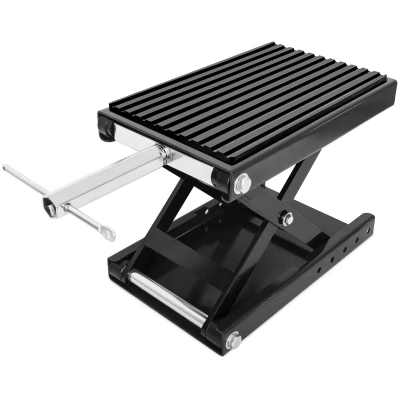
Motorcycle Lift or Stand Working on my bike is much easier with a motorcycle lift or center stand. I use a hydraulic lift for tasks like chain maintenance or wheel removal, as it keeps the bike stable and upright. If space is tight, a rear stand works well for chain lubing and basic repairs.
Chain Breaker and Riveting Tool For chain-driven bikes, a chain breaker and riveting tool is a must. I’ve used mine to replace worn chains, grinding off rivet heads and pressing new links into place. It’s a cost-effective way to maintain my bike’s drivetrain without a trip to the shop.
Impact Driver Stubborn bolts and screws are no match for my manual impact driver. By fitting the right bit and striking it with a hammer, I can loosen seized fasteners without damaging them. This tool has been a game-changer for working on older bikes.
Multimeter Electrical issues can be tricky, but my multimeter helps me diagnose problems like faulty wiring or a dead battery. It’s an essential tool for troubleshooting and ensuring my bike’s electrical system is in top shape.
Pliers and Wire Cutters I keep a variety of pliers—needle-nose, slip-joint, and wire lock pliers—for tasks like securing cotter pins or cutting cables. These are versatile tools I use more often than I expected.
Service Manual While not a tool, my motorcycle’s service manual is my most valuable resource. It provides torque specs, step-by-step instructions, and diagrams tailored to my bike. I prefer Haynes or Clymer manuals for their DIY-friendly approach.
Additional Tools for Advanced Repairs
As I’ve grown more confident in my wrenching skills, I’ve added these tools to my kit:
Feeler Gauges: For adjusting valve clearances.
Tire Spoons: For changing tires manually.
Bearing Puller: For removing bearings without damage.
Carburetor Synchronizer: For tuning multi-cylinder bikes.
Why I Do My Own Motorcycle Repairs
Working on my motorcycle is more than just saving money—it’s about understanding my bike and ensuring it’s ready for every ride. With the right tools, I’ve tackled everything from oil changes to chain replacements, and the satisfaction of a job well done is unbeatable. Plus, I can hit the road with confidence, knowing my bike is in peak condition.


 CE Certified
 CE Certified
 CE Certified
 CE Certified


 CE Certified
 CE Certified

 CE Certified